


Qatar Rental Market 2025: Region-by-Region Performance
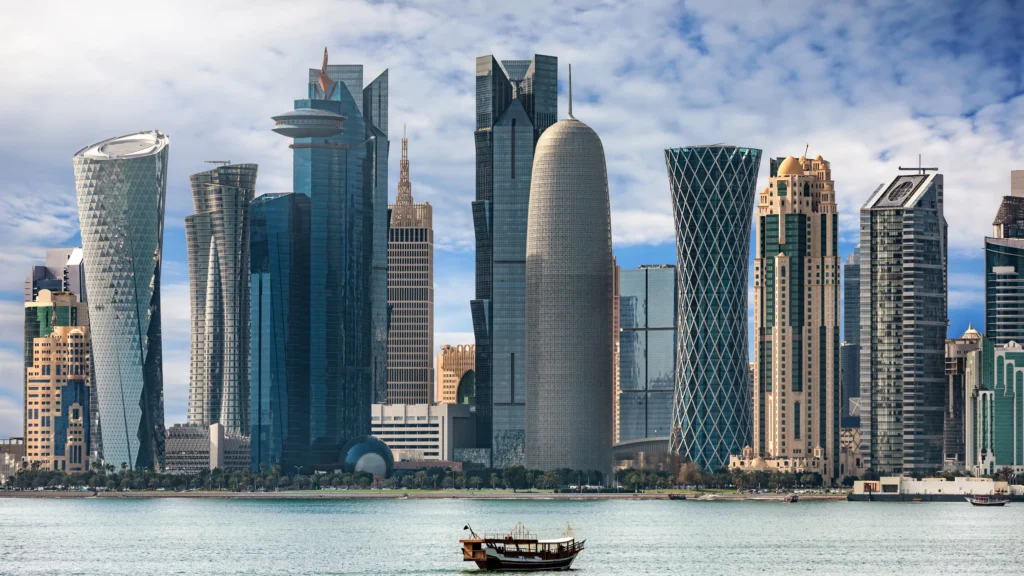
In 2025, the Qatar Rental Market continues to attract landlords and investors. Qatar has a population of around 3 million, 75% of whom are expatriates mainly concentrated in Greater Doha. More than half of occupied dwellings (59%) are rented, and the typical expatriate household spends nearly a third of its annual income on rent. These figures highlight the importance of the rental sector to the national economy. The average gross rental yield for dwellings was around 5 – 6% at the beginning of 2025, an attractive level in the region. With stable prices and sustained demand from expatriates, the Qatari rental market remains strong, despite slight downward pressure on certain segments in 2024. This article analyses these performances in detail by area, annual developments and provides practical advice for landlords.
Overview of the national rental market
At the national level, key indicators confirm the stability of the Qatari rental market. For example:
- Average yield ≈5.9% (Q1 2025), with a price/rent ratio of approximately 19 years.
- Median residential rent: QAR 8,500/month (–1% year-on-year in Q1 2025). In detail, the average rent for an apartment is around QAR 6,000/month and for a villa around QAR 12,000/month.
- Housing stock ~401,500 units in Q1 2025, including ~253,500 apartments and 148,000 villas. Around 2,000 apartments were delivered in Q1, and nearly 7,200 new units are expected over the year. This increase in supply slightly exceeds the growth in demand, which explains the slight easing of rents observed recently.
These factors suggest a broadly balanced market: rental values remain stable (average rents are constant or falling very slightly), yields remain reasonable, and the price/rent ratio is not skyrocketing. The sector also benefits from favourable credit conditions for expatriates (low-interest mortgages, tax breaks), which support residential demand. In this context, the majority of rents are paid regularly each month, but landlords must remain vigilant about the risk of late or non-payment.
The best and worst performing areas in 2025
The rental market is not evolving uniformly across the country. Some premium areas are seeing rents and values remain stable or increase, while other sectors, often more ‘mainstream’, are experiencing declines. Among the sectors on the rise:
- Pearl-Qatar (Lusail): demand supported by wealthy expatriates, high-end products. Sale prices have even risen slightly (+1.6% year-on-year) and rents are holding steady.
- Ain Khaled (southern suburbs of Doha): limited supply and new developments, property values up +2.2% year-on-year.
- West Bay (central Doha): despite some adjustment in the property market (see below), this business district remains highly sought after for rentals. (For example, rents for one-bedroom flats rebounded by +4.1% YoY in Q3 2024.)
Conversely, the poorest performance was observed in:
- West Bay Lagoon and Old Airport: oversupply and underutilised new supply caused sales prices to fall (–5.3% and –4.0% YoY), leading to a slight decline in rents.
- Popular neighbourhoods (Najma, Fereej Bin Mahmoud, Al Mansoura): less affluent population bases, increase in the supply of affordable housing. Najma saw rents fall by nearly –12.9% year-on-year (Q3 2024), and Fereej Bin Mahmoud by –6.4% over the quarter.
Overall, rental performance therefore reflects a dichotomy between the prime and mass markets: high-end areas (should we call them the Qatari ‘États-Basel’?) are holding steady, while more affordable areas are stabilising or seeing a slight correction in rents.
Qatar Rental Market Performance by Region
Regional differences within Qatar are mainly due to new infrastructure and urban dynamics. Doha and its flagship projects (West Bay, The Pearl, Lusail) benefit from excellent connectivity and modern amenities, which supports rental demand. For example, The Pearl-Qatar and Lusail Marina continue to attract affluent expatriates, with high and stable rents. These mature micro-markets offer quality housing (serviced villas, high-end apartments) that maintain good returns. At the same time, new urban centres are developing: Msheireb Downtown, Al Waab and West Bay Lagoon are seeking to attract families with villas and green spaces.
On the other hand, municipalities located far from the economic centre are benefiting from the national infrastructure plan. The extension of the Doha metro and motorways has made cities such as Al Wakrah and Al Khor more accessible. These areas, which have historically been less expensive, are now becoming more attractive to families and young professionals looking for affordable, modern housing. The increase in supply in the north (particularly The Pearl with its new extensions) and the south (Zekreet, Barwa Al Khor) is helping to balance the national market.
Overall, there is a ‘sprinkling of stars’ across the peninsula: Doha shines with its towers and premium neighbourhoods, while the newly served regions are gaining momentum. However, this dynamic is reflected in a transition: rents in the best-served areas remain high, and pressure on the outlying neighbourhoods is easing.
Annual Rent Changes in the Qatar Rental Market
Over the course of a year, rent trends reflect the polarisation of the market. Overall, the increase in supply has led to a slight decline in average rents. In Q1 2025, the median monthly rent remained stable at around QAR 8,500, down 1% year-on-year. This decline is modest, but the figure masks significant disparities:
- Increase in the high-end segment: ents have risen in certain central neighbourhoods. For example, West Bay recorded an increase of around +4.1% YoY (Q3 2024) for studios. In Doha itself, some sea view apartments even saw their rental prices rise at the end of 2024.
- Decline in secondary areas: in contrast, several popular areas experienced sharp declines. Najma lost nearly 12.9% YoY (Q3 2024), and other neighbourhoods in inner Doha, such as Al Sadd, saw declines of 6–7%. Over the whole of 2024, average apartment rents therefore fell slightly (by 1–2% on average), with tenants benefiting from a tense balance of power in a market that is now favourable to buyers and tenants.
Key points of YoY trends:
- Rents stable at a median of QAR 8,500 (+0 QAR, –1% YoY).
- Apartments (1–3 bedrooms): slight decrease in rents (–2% YoY for a one-bedroom apartment).
- Premium neighbourhoods: slight increase in rents (West Bay +4.1% YoY).
- Popular neighbourhoods: sharp decline (Najma –12.9% YoY).
These annual changes indicate that tenants have gained bargaining power, especially in the mid-range market. However, owners of the most sought-after properties (limited supply or luxury) are maintaining their rents.
Implications for landlords
For landlords, these trends require vigilance and adaptation. The main challenge remains ensuring timely rent payments and reducing unpaid rent, in a context where 90% of rental transactions are still managed by deferred cheques. This traditional payment method lacks transparency and does not guarantee the monitoring of late payments. Here are some recommended best practices:
- Modernise payment methods: Offer online payments or direct debit (via standing order or secure mobile app). Specialised platforms, such as Tatami, allow tenants to pay their rent digitally and landlords to track payments instantly.
- Diversify options: don’t just accept cheques. Allowing multiple payment methods (bank transfer, credit card, or even mobile wallet) simplifies the tenant’s life and reduces the risk of unintentional late payments.
- Automate reminders:use rental management or property accounting software that automatically sends alerts before the rent is due. A simple text message or email reminder (a few days before the deadline) significantly increases the rate of on-time payments.
- Clear contractual clauses: include late payment penalties or rent default insurance (RDI) in the lease if available in Qatar. These mechanisms deter late payments and protect the landlord.
- Tenant selection:carry out rigorous screening (proof of employment/income, reliable guarantors, payment history). A good tenant (‘tenant screening’) = less likelihood of late payments.
By adopting these practices (e.g. digitisation via modern property management tools), landlords will be able to significantly improve their on-time collection rates. This optimises profitability and avoids costly disputes. It should be noted that new fintech solutions are emerging in Qatar specifically to solve these problems: for example, the start-up Tatami offers an automated rent payment service that records transactions and gives tenants loyalty benefits.
Advantage of a SaaS Solution for Property Management in Qatar
With Qatar’s housing stock expanding and property portfolios becoming more diverse, manual management is increasingly challenging. A SaaS solution for Property Management and Facility Management, as used by Andalus, offers complete centralization: rent tracking, maintenance coordination, tenant communications, and real-time financial reporting. Such tools save time, improve transparency, and increase on-time rent payments through automation and integrated reminders. For landlords and managers, this means higher profitability and stronger tenant satisfaction.
Conclusion and outlook
In summary, the Qatari rental market in 2025 is characterised by overall stability: average rental values are stable (median rent ~QAR 8,500), yields remain around 5–6%, and economic growth (2–3% in 2024–25) supports demand for housing. The main changes are geographical: popular neighbourhoods in Doha (Pearl, Lusail, West Bay) are maintaining high rents and even seeing slight increases, while more affordable areas are experiencing a slight decline or strong downward pressure. Looking ahead, continued public investment (metro, roads, new neighbourhoods) and the arrival of new units (7,000+ in 2025) are likely to continue reshaping the rental landscape. The country’s economic growth projections (around +5–6% in 2026 according to the IMF) suggest that demand for modern rental housing will remain strong.
Sources:
- Value Strat
- The Peninsula Qatar
- The Pearlgates
- Tatamihq
