


Property Management Software for Small Landlords
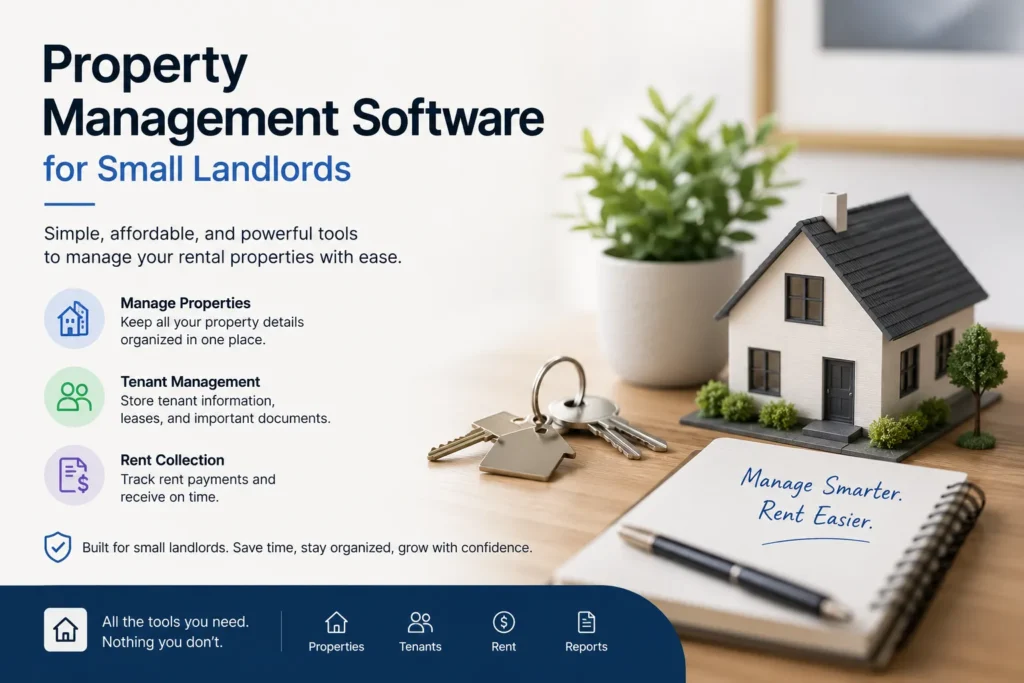
The Qatar rental market is evolving at a pace that leaves no room for spreadsheets and paper leases. From the high-rises of West Bay to the waterfront villas of Lusail, landlords across Doha face a new reality: managing properties manually in 2026 is not just inefficient , it is a genuine financial risk. Missed lease renewals, untracked maintenance requests, and outdated payment systems drain time and erode ROI. This guide helps you identify the right property management software for small landlords to automate your income, stay legally compliant, and compete in one of the Gulf’s most dynamic rental markets.
Why You Should Adopt Property Management Software for Small Landlords Today
Eliminating Administrative Overload in Doha’s Real Estate
Managing even two or three residential units in Qatar generates a significant administrative load: lease renewals, Tawtheeq registration deadlines, tenant communications, utility tracking, and financial reporting. When these tasks are handled manually, errors compound. A single missed Baladiya registration can trigger penalties, since the Ministry of Municipality requires lease contracts to be registered within 60 days of signing, at a fee of 0.5% of the annual rent. Property management software centralises all of this into one dashboard, reducing your administrative workload by up to 70%.
Maximizing Occupancy Rates with Smarter Marketing Tools
Vacancy is the silent killer of rental income. In Doha’s competitive market, where studio apartments in The Pearl-Qatar range from 2,350 to 7,000 QAR per month, every unoccupied week represents direct revenue loss. Modern rental property management tools include integrated listing syndication, automated vacancy alerts, and performance dashboards that help you benchmark occupancy rates against local market averages. These features allow you to act before a tenant leaves rather than scrambling after they do.
Ensuring Total Compliance with Qatari Rental Laws and Baladiya
Qatar’s rental legislation was last significantly updated with Law No. 4/2008 and its subsequent amendments, which govern written lease requirements, tenant rights, and eviction procedures. Staying current requires more than good intentions, it requires systems. Leading property platforms now support document storage for Tawtheeq contracts, automated reminders 90 days before lease expiry (aligned with Qatar’s standard notice periods), and audit-ready financial logs. This is the foundation of responsible real estate investment in Qatar.
Essential Features of Modern Rental Property Management Tools
Digital Rent Collection: Shifting from Cheques to Instant Payments
The post-dated cheque (PDC) system remains common in Qatar, but it is increasingly impractical. Cheques bounce, get lost, and create reconciliation headaches. Leading platforms now integrate with local payment gateways including SkipCash and Sadad, enabling tenants to pay rent directly from their Qatari bank accounts or digital wallets. This shift reduces late payments, eliminates manual bank runs, and creates instant, searchable payment records in Qatari Riyal (QAR).
Automated Maintenance Requests for the Qatari Climate
Qatar’s climate creates specific and recurring maintenance demands: HVAC failures during peak summer heat, water pressure issues in high-rise buildings, and air conditioning servicing are routine tickets in Doha and Lusail. Property management software allows tenants to log maintenance requests through a dedicated portal, automatically routes them to your registered contractors, and tracks resolution timelines. This reduces emergency costs and improves tenant satisfaction, directly supporting lease renewal rates.
AI-Powered Tenant Screening and Document Verification
Tenant screening in Qatar involves verifying QID documents, employment status, and rental history. AI-powered screening tools now automate much of this process, flagging incomplete applications and cross-referencing documents automatically. According to the 2026 Andalus market guide, AI-assisted screening is one of the most impactful adoption drivers for property management software among landlords managing portfolios in Doha and Lusail.
Comparing the Best Property Management Software for Small Landlords in 2026
The Best All-in-One Solution for Scaling Portfolios
Andalus stands out as the leading locally-adapted platform for the GCC market. It covers lease management, maintenance tracking, financial reporting, and automated reminders, all with native QAR support and compliance features aligned with Qatar’s regulatory framework. It is particularly suited to landlords managing mixed portfolios of apartments and villas across Doha and surrounding areas.
Top Free Software for Landlords with Limited Units
For landlords managing fewer than five units, Tatami offers an accessible entry point. It handles leases, maintenance workflows, and a basic tenant portal without the overhead of enterprise pricing. It is well-suited to residential portfolios including villas and apartment rentals in the Doha and Lusail corridor.
The Leading Mobile-First Platform for Real-Time Tracking
SunSmart TireFM delivers real-time document tracking and maintenance monitoring through a mobile-first interface with full QAR support. For landlords managing properties remotely, a growing segment of Qatar’s investor community, its cloud-based architecture ensures 24/7 access from anywhere in the world.
Most Robust Tool for Financial Reporting and Tax Prep
Bright ERP offers the most comprehensive financial suite available for Qatar-based landlords, covering occupancy analytics, asset management, and lease performance reporting. Its reporting layer is designed to produce audit-ready outputs, making it ideal for landlords who need to demonstrate portfolio health to financial institutions or partners.
Localizing Your Management Strategy for the Qatar Market

Handling Qatari Riyal (QAR) and Local Bank Reconciliations
Every financial feature in your platform must operate natively in QAR. Currency conversion errors or delayed reconciliations can distort your P&L and complicate tax preparation. Ensure your chosen software supports direct integration with Qatari banks and generates reports denominated in QAR by default.
Managing Kahramaa and Utility Billing Through Your Platform
Utility management is a key pain point in Qatar. Kahramaa, the national electricity and water utility, now offers digital billing through its official app and website, with QID-linked account access. Some property platforms allow you to track Kahramaa payments alongside rent collection, giving you a complete financial picture for each unit. This is especially valuable when managing multiple units where utility responsibility is split between landlord and tenant.
Navigating the Cultural Dynamics of Tenant Communication in Qatar
Qatar’s tenant population is highly diverse, comprising expatriates from across Asia, Europe, and the Arab world. Effective communication means offering multilingual interfaces, respecting local customs around response times, and being proactive rather than reactive. Platforms with built-in messaging portals and automated notification systems, in both Arabic and English, significantly reduce friction and improve the landlord-tenant relationship.
Transitioning from Manual Tracking to Digital Automation
Step 1: Centralise your lease data and tenant records. Upload all existing contracts, QID copies, and Tawtheeq documents into your new platform during onboarding. Most platforms offer guided data migration.
Step 2: Set up automated rent reminders and late fees. Configure reminder sequences at 7, 3, and 1 day before due dates, and establish a transparent late fee policy aligned with your lease terms.
Step 3: Integrate your local maintenance vendors. Add your trusted contractors to the platform and define routing rules by issue type. This eliminates the back-and-forth of manual coordination and creates a trackable service record for each property.
Smart Tips to Maximize Your Software ROI in 2026
AI vacancy prediction tools analyse historical occupancy data, seasonal rental trends, and local market signals to flag properties at risk of turnover, sometimes months in advance. At The Pearl-Qatar, where rental demand follows distinct seasonal curves, this intelligence is invaluable. Additionally, integrated virtual tour features allow prospective tenants to view units remotely, reducing unnecessary viewings and accelerating the leasing cycle.
Frequently Asked Questions About Property Management in Qatar
Is it legal to use property management software for small landlords to manage my apartments in Doha? Absolutely. Property management software is a productivity tool, not a licensed real estate agency service. Any landlord can use it independently to manage their own portfolio.
Can I manage my Lusail property from abroad using these tools? Yes. Cloud-based platforms give you full access to leases, payments, maintenance tickets, and tenant communications from any device, anywhere in the world.
Do these platforms support Qatari Riyal (QAR) transactions? Leading platforms including Andalus, SunSmart TireFM, and Bright ERP all natively support QAR transactions and local bank reconciliation.
How does the software handle Baladiya lease registration? Most platforms provide document storage and Tawtheeq tracking features, with deadline reminders to ensure you never miss the 60-day registration window required by the Ministry of Municipality.
Conclusion
Choosing the right property management software for small landlords is not a matter of convenience in 2026, it is a matter of protecting your investment. Qatar’s rental market rewards those who operate with precision: timely Baladiya registrations, seamless digital payments, proactive maintenance, and data-driven occupancy strategies. Whether you own one villa in Lusail or a portfolio of apartments across Doha, the right platform transforms your real estate from a time-consuming side project into a well-governed, income-generating asset. The technology exists. The regulatory framework demands it. The only remaining question is which platform fits your portfolio best.
Sources: Ministry of Municipality (Baladiya) – Tawtheeq registration guidelines; Law No. 4/2008 on rental leases (amended); Kahramaa official utility portal; Andalus 2026 Qatar Property Management Guide; L’Essentiel de l’Éco – Qatar rental market data 2025–2026.
